

Quick answer
It depends on the type of shock. After a non-chlorine shock, you can usually swim in about 15 minutes. After a chlorine shock (liquid chlorine, cal-hypo or dichlor), wait until your free chlorine tests back in the normal range, roughly 1–4 ppm. That usually takes 8 to 24 hours, and sometimes longer. Test the water before anyone gets in, and always follow the directions on the product label.
Shocking your pool is one of the most important parts of keeping the water clean. It’s also the step that raises the most questions at our Poughkeepsie store, and the most common one is how long you have to wait before the kids can jump back in. Here’s how to know when it’s safe, and how to plan your shock so the pool is ready when you want it.
Why you have to wait after shocking
“Shocking” means adding a large dose of oxidizer to break down sweat, sunscreen, body oils and other contaminants that build up in the water. A chlorine shock temporarily pushes chlorine far above normal swimming levels so it can kill bacteria and algae. At those levels, the water can irritate eyes and skin and bleach swimsuits. The wait gives the chlorine time to do its job and then drop back to a comfortable level.
Wait times by type of shock
| Shock type | Typical wait before swimming | Good to know |
|---|---|---|
| Non-chlorine shock (potassium monopersulfate) |
About 15 minutes | Oxidizes contaminants without raising chlorine. Great for a quick refresh after a pool party, but it won’t clear algae. |
| Liquid chlorine (sodium hypochlorite) |
Until free chlorine is back to 1–4 ppm, often overnight | Fast-acting and easy to dose. It’s unstabilized, so the sun burns it off quickly. Add it in the evening. |
| Calcium hypochlorite (“cal-hypo”) |
Often 24 hours. Test first. | Strong granular shock. Pre-dissolve it in a bucket of pool water so undissolved granules don’t settle on and bleach a vinyl liner. |
| Dichlor (stabilized granular) |
Often 24 hours. Test first. | Contains stabilizer (cyanuric acid), so it holds up in sunlight. Frequent use builds up stabilizer over time. |
The clock is only a guide. Pool size, how much shock you used, sunlight, water temperature and your stabilizer level all change how fast chlorine drops. A quick test is the only way to know for sure.
How to tell when it’s safe to swim
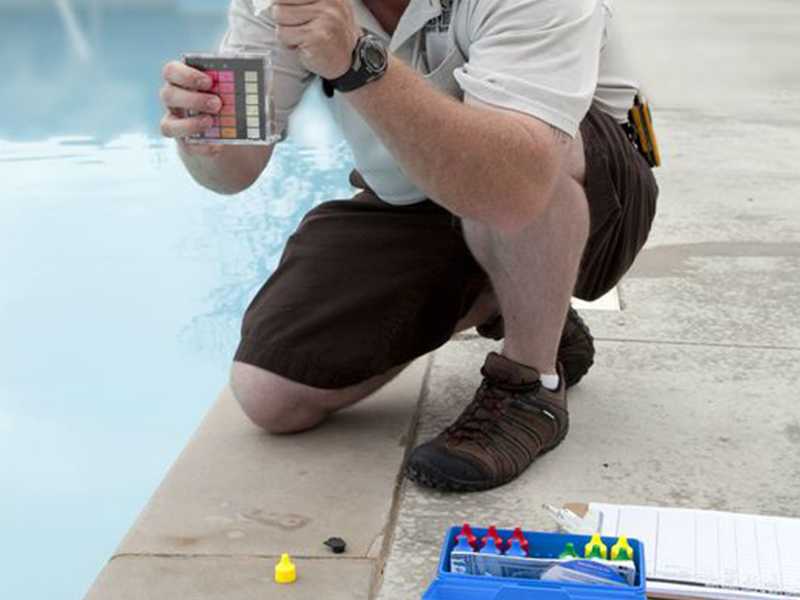
Before swimming, test for two things:
- Free chlorine: back in your normal range, roughly 1–4 ppm for most home pools. The CDC recommends keeping free chlorine at least 1 ppm in pools without stabilizer, and at least 2 ppm in pools that use it.
- pH: between about 7.2 and 7.8. A big shock dose can move your pH, and water outside that range feels harsher and makes chlorine less effective.
A DPD drop test kit is more accurate than test strips, especially at high chlorine levels. If you’re not sure about your readings, bring a water sample to our store. Water testing at Classic Pools is free, and we’ll tell you exactly what, if anything, your pool needs.
How to shock your pool so it’s ready sooner
- Shock in the evening. Sunlight quickly breaks down unstabilized chlorine. Shocking at dusk lets it work all night, so the water is usually ready by the next afternoon.
- Run the pump and brush. Keep the filter running overnight to circulate the shock, and brush the walls and floor to stir up anything clinging to the surfaces.
- Pre-dissolve granular shock in vinyl-liner pools. Mix it into a bucket of pool water, then pour it slowly around the edge, in front of a return jet.
- Test in the morning. Check free chlorine and pH. If chlorine is still high, leave the cover off, keep the pump running and retest in a few hours.
- Use non-chlorine shock between chlorine treatments. For weekly maintenance during a busy stretch of summer, it lets you swim again almost right away.
If you shocked to clear algae
Treating green or cloudy water is different from a routine shock. Chlorine needs to stay high until the algae is gone, which can take more than one dose. Don’t swim until the water is clear, and use this simple rule: if you can’t see the bottom or the main drain, nobody goes in. Once the water clears and chlorine returns to normal, you’re good to go.
Pool chemical safety reminders
- Always add chemicals to water, never water to chemicals.
- Never mix different types of shock or chemicals together, even in the same scoop or bucket.
- Store shock in a cool, dry place, away from other pool chemicals and out of reach of kids and pets.
- Follow the dosage and safety directions on the label.
Need shock, test kits or balancing chemicals? We stock Phoenix pool chemicals and water care supplies at our Poughkeepsie store. See the chemicals we carry.
Frequently Asked Questions
Can you swim right after shocking a pool?
Only after a non-chlorine (potassium monopersulfate) shock, which usually needs about 15 minutes. After a chlorine shock, wait until free chlorine tests back in the normal range of roughly 1–4 ppm.
How long after shocking an above-ground pool can you swim?
The same rules apply as for an in-ground pool: about 15 minutes for non-chlorine shock, and until free chlorine is back to roughly 1–4 ppm for chlorine shock. Smaller pools can come back into range sooner, so test rather than guess.
What chlorine level is safe to swim in?
For most home pools, roughly 1–4 ppm free chlorine with a pH between about 7.2 and 7.8. The CDC recommends at least 1 ppm in pools without stabilizer and at least 2 ppm in pools with stabilizer.
How often should I shock my pool?
Many pool owners shock weekly during the swim season, plus after heavy use, a big storm, or when the water starts to look dull or cloudy. A water test will tell you whether it’s needed.
Where can I get my pool water tested in Poughkeepsie?
Bring a water sample to Classic Pools at 1820 New Hackensack Road in Poughkeepsie. Water testing is free, and we’ll tell you exactly what to add.
Questions about your pool?
Stop by our Poughkeepsie store at 1820 New Hackensack Road or call (845) 297-0004. We're happy to help.

